Various
A section to cover anything else off not specific to a certain Amiga model
ROM Adapters
I bought myself a T48 IC programmer and adapter a while back since I wanted to test ICs and program EPROMs and other chips. As the 500/600 and 1200s all use the 27C400 EPROM chips I thought I'd just buy some. But they are getting expensive now and I discovered the 27C800 is much cheaper and has some benefits over the 27C400. However, you can’t just use a 27C800 in an Amiga without some modifications.
The 27C400 is a 40 pin 512kB ROM chip and the 27C800 is a 42 pin 1MB ROM chip. The larger 1MB EPROM allows you to program it with two kick start images and with the right modification you can switch between each ROM image.
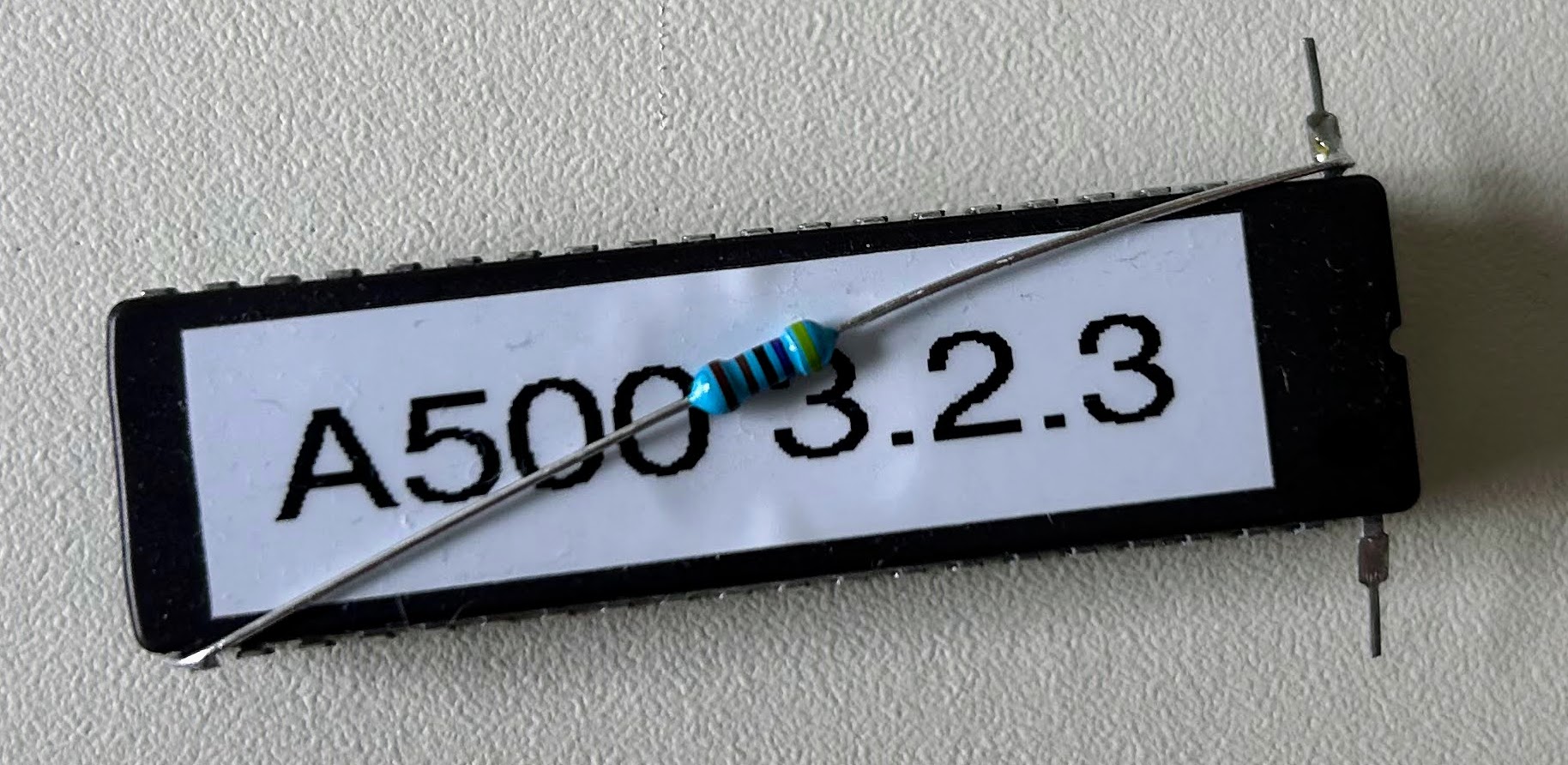
My first attempt involved bending out pins 1 and 42 so that they would not make contact when plugged in. I soldered a 4.7k resistor between pings 1 and 22. Grounding ping 1 or not allows you to switch between ROM images. Not pretty but I could switch between ROM images which made troubleshooting a faulty A500 easier as I had both DiagROM and Kick Start 1.3 on the same 27C800 EPROM.
But to make this a bit prettier and easier to use I had a look around and discovered a couple of PCBs available through PCBWay. One was for use on the A500 Rev.6 and the other for the Rev.5. This would allow you to use the 27C160/28C400/27C800 with a simple jumper to switch between upper and lower on the 27C800. I wasn’t familiar with the 27C160 but this looks to be a 2MB chip allowing you to write up to 4 ROMs and the adapter allows you to switch between all 4.
PCBWay Project Rev.6
PCBWay Project Rev.5
You must order a minimum of 5 PCBs of each but they were cheap and when you use the basic shipping option rather than something like DHL it is a pretty cheap project.
To keep costs down I ordered the DIP-42 sockets, 4.7K SMD resistors and header pins off AliExpress and built one of each and they worked! With the header pins this makes it safe and easy to get the adapter in and out of the Amiga’s EPROM socket as the header pins are more robust than the EPROM itself.
I won’t go into the details of how to program the EPROMs as there’s plenty of tutorials out there.